
THE TURNKEY RETIREMENT SURVIVAL BLOG
Navigating the Life Side of
Retirement
Retirement is more than money. It's identity, purpose, relationships,
technology, income, faith, and learning how to design the next chapter
with intention.
FEATURED POSTS
_____________

Decision Fatigue in Retirement: Why Too Much Freedom Can Feel Paralyzing
The career that once structured every hour of your day is gone. Now you have unlimited time and unlimited choices — and somehow, that feels worse.
Here is something that almost nobody tells you about retirement, and that almost nobody believes until they experience it themselves: too much freedom can feel terrible.
Not because freedom is bad. But because the human brain was not designed to operate without structure, and the particular kind of structure that a career provides — the external scaffolding of schedules, deadlines, priorities, and roles — turns out to be doing an enormous amount of psychological work that most people never notice until it's gone.
The result, for a surprising number of retirees, is a phenomenon that psychologists call decision fatigue: the mental exhaustion that comes not from too much work, but from too many choices. And in retirement — where every morning begins with a blank calendar and an infinite menu of possibilities — decision fatigue can quietly undermine the very freedom that retirement was supposed to deliver.
What Decision Fatigue Actually Is
The concept of decision fatigue was first rigorously documented by social psychologist Roy Baumeister, whose research on what he called "ego depletion" demonstrated that the capacity to make decisions is a finite cognitive resource. Every choice you make — from what to eat for breakfast to whether to call a friend or go for a walk — draws from the same mental reservoir. As the day progresses and the choices accumulate, the quality of your decisions deteriorates and the effort required to make them increases.
In a working life, this resource is managed largely by the external structure of the job. Your schedule is set. Your priorities are determined. Your role defines what decisions are yours to make and which belong to someone else. You are not choosing, every morning, how to organize your time, what to pursue, what to prioritize, or what your day is for. The career makes most of those choices for you — and in doing so, it preserves your cognitive resources for the decisions that actually require your attention.
In retirement, that external structure disappears. And what replaces it — for many retirees, especially in the early months — is an overwhelming expanse of undifferentiated time and an almost paralyzing abundance of choice.
This is not a character weakness. It is not ingratitude. It is a well-documented cognitive phenomenon that affects virtually everyone who transitions from a highly structured professional life to an unstructured one. Understanding it is the first step toward navigating it.
The Paradox of Choice in the Retirement Years
The psychologist Barry Schwartz, in his influential research on what he called "the paradox of choice," found that an abundance of options — far from making people happier — tends to produce anxiety, regret, and dissatisfaction. When there are too many choices, the cognitive cost of evaluating them becomes burdensome, the fear of making the wrong choice becomes paralyzing, and the satisfaction derived from any given choice is diminished by awareness of all the alternatives not taken.
This paradox is particularly acute for high-achieving professionals entering retirement. These are people who spent decades operating in environments where their choices were consequential, their decisions were evaluated, and their performance was measured. The habits of mind that made them effective in those environments — the drive to optimize, the tendency to evaluate options thoroughly, the discomfort with ambiguity — do not disappear at retirement. They persist. And in the context of an unstructured retirement, they can turn the simple question of "what should I do today?" into an exhausting exercise in self-examination.
There is also a deeper dimension to this that connects to identity. For many high-achieving professionals, the career was not just a source of structure — it was a source of meaning. The choices they made at work mattered in a way that was externally validated and socially recognized. In retirement, the choices feel smaller, less consequential, less connected to a larger purpose. And that diminishment of stakes — paradoxically — can make the choices feel harder, not easier, because they no longer carry the weight of external validation to guide them.
The Signs That Decision Fatigue Is Affecting You
Decision fatigue in retirement rarely announces itself clearly. It tends to show up in subtler ways that can be easy to misattribute or dismiss.
You might notice that you feel oddly tired by mid-afternoon despite having done very little. You might find yourself postponing decisions that should be simple — what to have for dinner, whether to call a friend, whether to start a project you've been thinking about for months. You might experience a vague sense of restlessness or dissatisfaction that you can't quite name, a feeling that the day slipped away without anything meaningful happening, even though nothing went wrong.
You might also notice what researchers call "decision avoidance" — the tendency to default to familiar, low-effort choices rather than engaging with the full range of options available. This is the brain's way of conserving cognitive resources when it feels overwhelmed. It is adaptive in the short term and quietly corrosive in the long term, because it tends to produce a retirement that is narrower and less fulfilling than it could be.
The research on the 5 retirement mistakes that are catching people off guard in 2026 identifies a related pattern: the tendency to drift into a passive, reactive retirement rather than designing an active, intentional one. Decision fatigue is one of the primary mechanisms through which this drift occurs.
Why Structure Is Not the Enemy of Freedom
There is a common misconception about retirement that deserves to be addressed directly: the idea that structure and freedom are opposites, and that a truly free retirement is one with no structure at all.
The research suggests the opposite. Structure — when it is self-chosen rather than externally imposed — is one of the most powerful tools available for creating a retirement that feels genuinely free and genuinely fulfilling.
The distinction is important. The structure of a career was largely imposed from outside: your employer set your hours, your role defined your responsibilities, and your schedule was determined by the needs of the organization. That kind of structure can feel constraining, and its absence can feel like liberation — at first.
But self-chosen structure is different. A morning routine that you design. A weekly rhythm that reflects your values and your energy. A set of commitments — to creative work, to exercise, to social connection, to learning — that organize your time around what matters most to you. This kind of structure does not limit freedom. It creates the conditions in which freedom becomes genuinely enjoyable.
The happiest retirees, as we explored in our piece on seven things the happiest retirees do differently, are not the ones with the most unscheduled time. They are the ones who have built a daily and weekly rhythm that gives their time shape, purpose, and momentum.
The Cognitive Science of Routine
The neuroscience of habit formation offers a useful framework for understanding why routine is so valuable in retirement. When a behavior becomes habitual — when it is performed consistently enough that it no longer requires conscious deliberation — it shifts from the prefrontal cortex (the seat of effortful decision-making) to the basal ganglia (the brain's habit-execution system). This shift dramatically reduces the cognitive cost of the behavior and frees up mental resources for higher-order thinking and genuine creative engagement.
In practical terms, this means that a morning routine — even a simple one — can meaningfully reduce the decision fatigue that accumulates over the course of a day. When you don't have to decide whether to exercise, what to eat for breakfast, or when to do your most important work, because those decisions have been made in advance and encoded as habits, you arrive at the genuinely open portion of your day with more cognitive resources intact.
This is not about rigidity. It is about designing a framework that makes freedom possible. The writer and philosopher Simone de Beauvoir observed that freedom is not the absence of constraint but the capacity to act meaningfully within one's circumstances. A retirement without any structure is not freedom — it is drift. And drift, as many retirees discover, is its own kind of prison.
Building Structure That Serves You
The goal is not to recreate the structure of a career — that would defeat the purpose of retirement. The goal is to design a new kind of structure that is genuinely yours: one that reflects your values, your energy patterns, your relationships, and the contribution you want to make in this chapter of your life.
A few principles that the research consistently supports:
Anchor your mornings. The first hour of the day is disproportionately important for setting the cognitive and emotional tone of everything that follows. A consistent morning routine — however simple — reduces decision fatigue from the moment you wake up and creates a reliable foundation for the day.
Create weekly rhythms, not just daily ones. A retirement that has a weekly rhythm — certain days for certain activities, recurring social commitments, a regular time for creative or intellectual work — provides the kind of medium-term structure that prevents the weeks from blurring together into an undifferentiated mass.
Make your most important decisions in the morning. If you have choices to make about how to spend your time, make them early in the day when your cognitive resources are freshest. Decisions made in the afternoon or evening, when decision fatigue has accumulated, tend to be lower quality and less aligned with your actual values and priorities.
Limit your options deliberately. This sounds counterintuitive, but it is one of the most effective strategies for reducing decision fatigue. Rather than keeping every option open, choose three or four meaningful pursuits — creative, physical, social, intellectual — and commit to them. The constraint is liberating, not limiting, because it replaces the paralysis of infinite choice with the clarity of intentional commitment.
For practical guidance on building a retirement that feels genuinely fulfilling, our guide to how to enjoy retirement fully offers a grounded, research-backed framework for designing the life you actually want.
Your Action Steps This Week
1. Design a morning anchor routine. Identify three to five things you want to do every morning — in a consistent order — before the day opens up. It doesn't need to be elaborate. Coffee, a short walk, twenty minutes of reading, and a brief review of the day's intentions is enough. Write it down and follow it for two weeks.
2. Identify your three most important pursuits. Not everything you might do in retirement — the three things that matter most to you. Write them down. Make sure your weekly schedule reflects them.
3. Make tomorrow's decisions tonight. Before you go to bed, decide what you will do the following morning. Remove the decision from the morning itself. This single habit can meaningfully reduce the cognitive load of the first hour of your day.
4. Notice where you are drifting. Spend one week paying attention to where your time actually goes versus where you intend it to go. The gap between intention and reality is where decision fatigue is doing its quiet work.
A Final Word
The freedom of retirement is real, and it is genuinely extraordinary. But freedom without structure is not liberation — it is disorientation. The retirees who thrive are not the ones who simply stop working and wait for happiness to arrive. They are the ones who design their freedom with the same intentionality they once brought to their careers.
You spent decades building a professional life. Now it's time to build a personal one — with the same care, the same intelligence, and the same commitment to doing it well.
Explore more on navigating the unexpected challenges of retirement on our blog, and discover what the research says about the 85-year Harvard Study of Adult Development and what it reveals about what actually makes retirement fulfilling.
References & Further Reading
Baumeister, R. et al. (1998). Ego Depletion: Is the Active Self a Limited Resource? — Foundational research on decision fatigue and cognitive resource depletion
Schwartz, B. (2004). The Paradox of Choice — Research on how abundance of options produces anxiety and dissatisfaction
Danziger, S. et al. (2011). Extraneous Factors in Judicial Decisions — Classic study demonstrating decision fatigue effects on real-world decision quality
Wood, W. & Neal, D.T. (2007). A New Look at Habits and the Habit-Goal Interface — Neuroscience of habit formation and cognitive resource conservation
EBRI Retirement Confidence Survey (2025) — Annual survey on retirement preparedness and adjustment challenges
Psychology Today — Decision Fatigue in Retirement — Overview of decision fatigue research and practical implications

BROWSE BY TOPIC
Explore the Categories
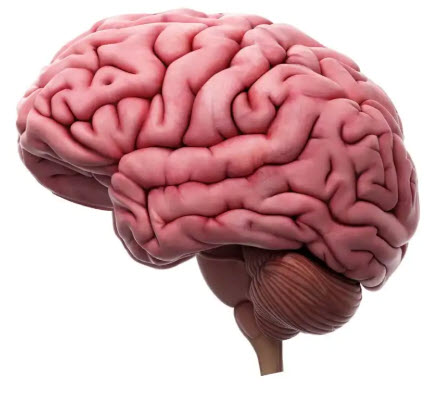
Retirement Mindset
Identity - Purpose - Transition

Retirement Income
Strategy - Side Income - Security

Faith & Purpose
Calling - Meaning - Community
Retirement Technology
Tools - Apps - Staying Current

Health & Wellness
Longevity - Energy - Vitality
FREE RESOURCE
Want to build purpose, income,
and confidence in retirement?
Join thousands of retirees who are designing their next chapter
with intention - not just hoping it works out.
Clarify your identity beyond your career
Build flexible retirement income
Rediscover purpose and faith
No spam. Just straight talk for the life side of retirement.
2026 Turnkey Services Pro ~ Privacy Policy ~ Home ~ Blog