
THE TURNKEY RETIREMENT SURVIVAL BLOG
Navigating the Life Side of
Retirement
Retirement is more than money. It's identity, purpose, relationships,
technology, income, faith, and learning how to design the next chapter
with intention.
FEATURED POSTS
_____________
Why Retirement Makes You Feel Less Capable (Even Though You're Not)
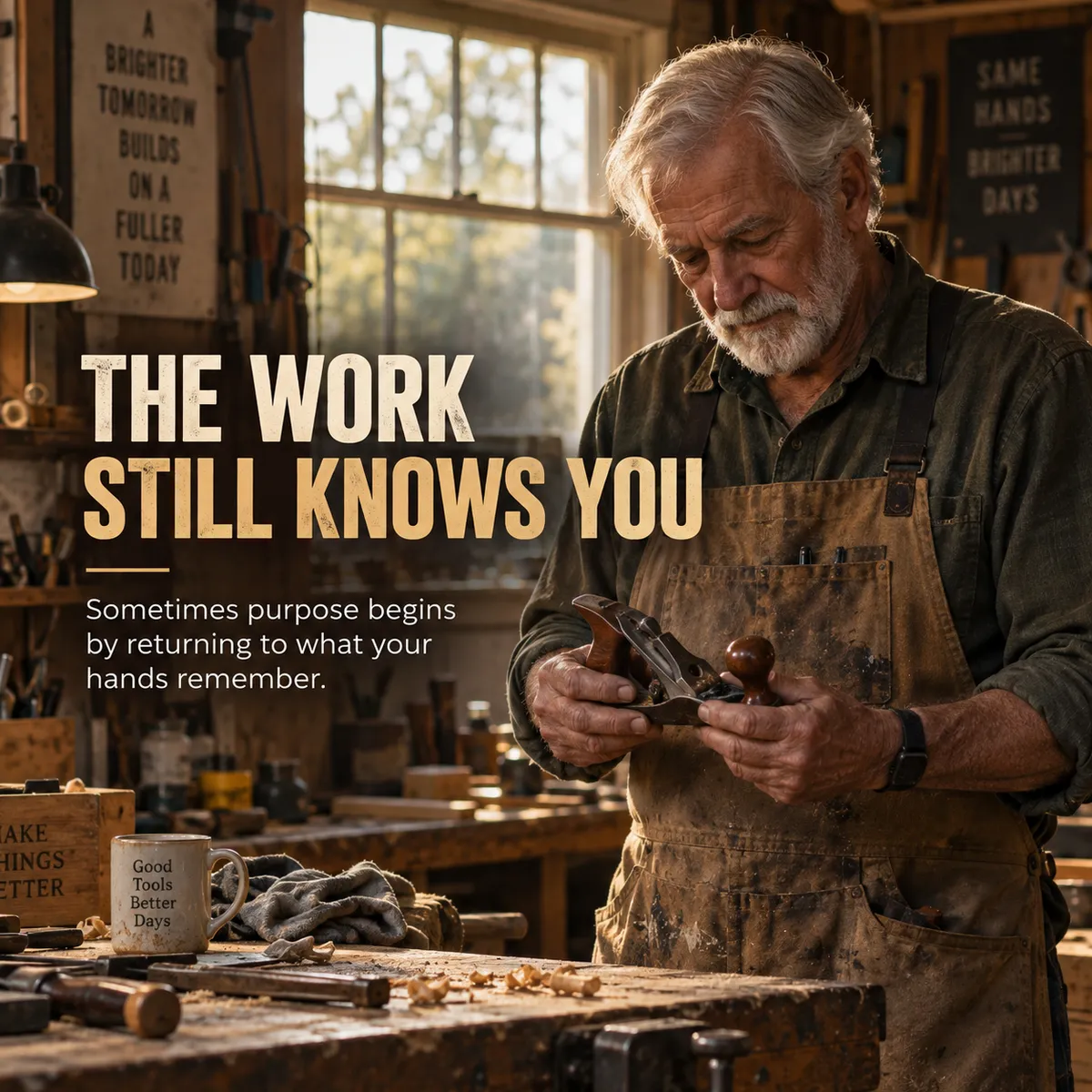
You spent thirty or forty years being good at something. You solved hard problems, made calls under pressure, and built a quiet, reliable confidence in your own competence. Then you retired, and somehow, without your skills going anywhere, you started to doubt them. If you've caught yourself wondering whether you're still sharp, still valuable, still capable of doing hard things well, you're not imagining it, and you're not alone.
Your Job Was Proving You, Not Just Paying You
For decades, your career was quietly doing something you probably never had to think about: it was generating proof of your own competence, every single day. A problem got solved and someone noticed. A decision got made under pressure and it held up. A project got finished and there was a result you could point to. Psychologists call this a sense of mastery, or personal efficacy — the felt experience of being good at something, continually reinforced by real evidence.
Retirement doesn't touch your actual ability. Your skills are exactly as intact as they were the week before you left. What retirement removes is the arena where that ability got tested and confirmed, day after day, without you ever asking for it. As we explored in I've Saved My Whole Life. Why Can't I Sleep?, your career was quietly supplying five things at once — Rhythm, Identity, Belonging, Capability, and Purpose. Capability is the one that tends to go unnoticed until it's gone, precisely because it never asked for your attention while you had it.
Why Confidence Erodes Faster Than Skill Does
Here's the part that catches so many retirees off guard: competence doesn't sit quietly once you stop exercising it. It starts to feel unfamiliar, almost like it belongs to someone else. Picture a concert pianist who stops performing publicly. Her fingers still know every note. Nothing about her actual skill has changed. But without the stage, without an audience responding in real time, her confidence erodes faster than her ability does.
That gap between what you can still do and what you believe you can still do is where a lot of retirees quietly get stuck. This is closely related to what we covered in Why High Achievers Struggle Most With Retirement: the more your identity was built on demonstrated competence, the more disorienting it feels when the demonstrations stop.
The Research Isn't Subtle About This
This isn't just a feeling — it shows up in the data. A 2025 AARP survey found that 79 percent of adults 50 and older say having a clear sense of purpose is very important to them, and a striking 77 percent said they're actively interested in learning how to build and maintain it — evidence that this isn't a problem people resign themselves to, it's one they're actively looking to solve.
Separately, a study on personal mastery among older adults found that engaging in activities with genuine learning and real stakes attached meaningfully restores a retiree's sense of competence and control, while passive activity does not move the needle nearly as much. That distinction matters more than almost anything else in this conversation, and it's one we'll go deeper on later this week.
It's Not a Character Problem. It's a Structural One.
If you've been feeling a little less sharp, a little less sure of yourself, even though nothing about your actual ability has changed, I want to be direct with you: that is not a flaw in your character. It's a gap in your structure. For decades, your days were engineered, by an employer, a team, a client base, to generate proof of your competence automatically. That engineering is gone now, and nothing has replaced it yet.
The good news, and it is genuinely good news, is that structural problems respond to structural solutions. You don't need to reinvent your entire identity overnight. You need one arena, even a small one, where your capability can be tested and seen again on purpose. We'll get specific about exactly what that looks like in the rest of this week's posts.
For now, sit with this question honestly: if someone asked you right now what you're good at, would you answer with the past tense, or the present?

BROWSE BY TOPIC
Explore the Categories
Retirement Mindset
Identity - Purpose - Transition

Retirement Income
Strategy - Side Income - Security

Faith & Purpose
Calling - Meaning - Community
Retirement Technology
Tools - Apps - Staying Current

Health & Wellness
Longevity - Energy - Vitality
FREE RESOURCE
Want to build purpose, income,
and confidence in retirement?
Join thousands of retirees who are designing their next chapter
with intention - not just hoping it works out.
Clarify your identity beyond your career
Build flexible retirement income
Rediscover purpose and faith
No spam. Just straight talk for the life side of retirement.
2026 Turnkey Services Pro ~ Privacy Policy ~ Home ~ Blog