
THE TURNKEY RETIREMENT SURVIVAL BLOG
Navigating the Life Side of
Retirement
Retirement is more than money. It's identity, purpose, relationships,
technology, income, faith, and learning how to design the next chapter
with intention.
FEATURED POSTS
_____________
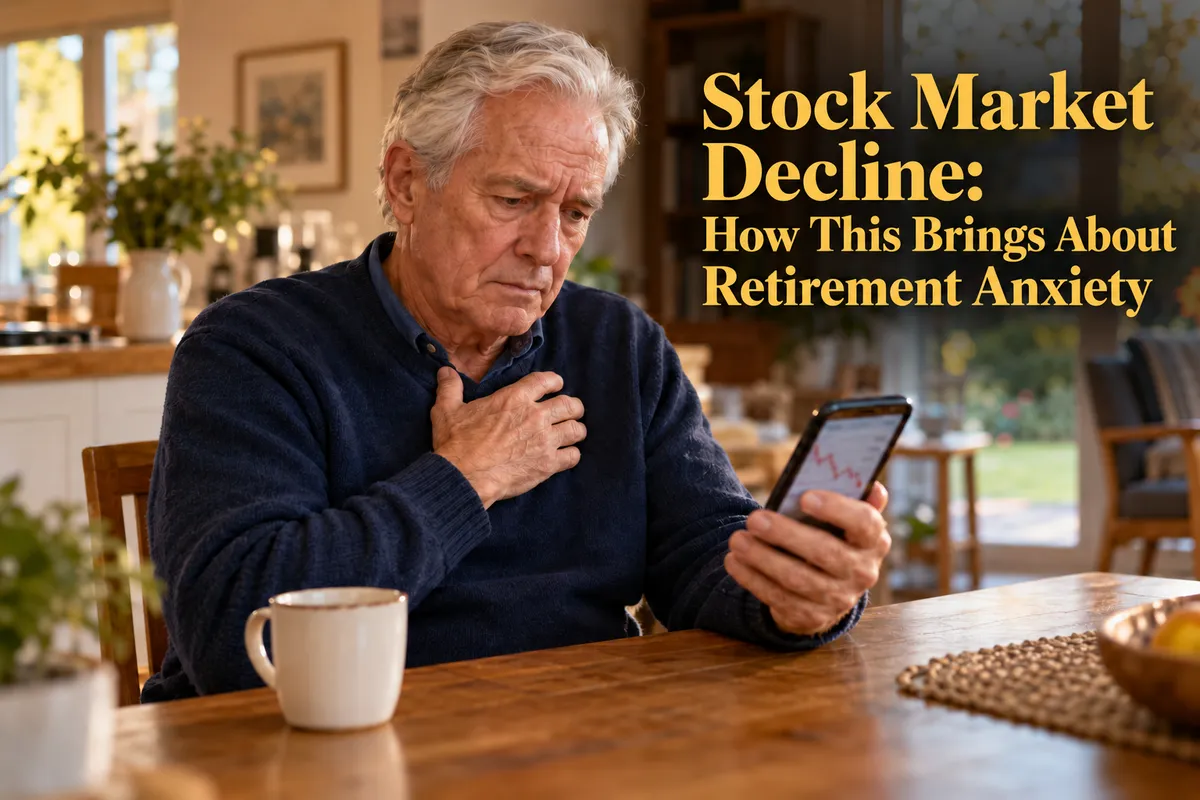
Retirement Market Anxiety: Why a Down Day Feels So Personal
You didn't lose a single thing today. Not really. The house is still yours, the groceries are still in the fridge, and your plans for the weekend haven't changed. And yet you've felt sick since you looked at that screen. If that sounds familiar, I want you to know something right away: there is nothing wrong with you.
Why does a number on a screen feel so personal?
Because for forty years, you had a different number. It showed up every two weeks. And it did far more than pay the bills. It told you that you were needed, that you were useful, that somebody had decided your time was worth something.
When you retired, the paycheck stopped. But the need it was meeting didn't. So without ever deciding to, you handed that job to your account balance. Now it has to be your safety net, your proof of good decisions, and your scoreboard, all at once.
That is a lot to ask of a number. It's no wonder it can knock the wind out of you when it dips.
How common is this?
More common than most people admit out loud. A Kiplinger report on market volatility and retirement nerves found that 57 percent of Americans feel anxious about their financial future when their retirement accounts decline, and that half check their balances right after a dip. The same piece found that two-thirds of Americans worry more about depleting their savings than about death.
And it's growing. MetLife's 2026 Paycheck or Pot of Gold study found that 51 percent of current retirees worry about depleting their savings, up from 30 percent a decade ago.
So if you've ever refreshed that app at two in the morning, you are in very large company. You just may not have heard anyone say so. (Related reading: Why You Feel Anxious After the Paycheck Stops.)
Is this really about the money?
Here's where I'll push back a little. It's not about the money. It never was.
Think about what happens to a lot of careful, hardworking people when they stop earning. Old National's look at the psychology of spending in retirement describes how decades of frugality harden into identity, how spending that once felt earned can suddenly feel unjustified, and how a down market can confirm a quiet inner voice that says, be careful, you haven't earned the right to relax.
That voice isn't a financial calculation. It's the part of you that built your whole sense of self on being responsible. When the market drops, it doesn't just worry. It accuses.
And if you were the person everyone turned to at work, the one who always had the answer, there's another loss tucked in there too. You've run into a problem you can't fix, manage, or take charge of. For people who defined themselves by competence, that can feel more frightening than the dollar amount.
What is the number really standing in for?
Try this the next time your chest tightens. Don't ask, how bad is it? Ask, what am I afraid this means about me?
For a lot of people, the honest answers sound like this: I'm afraid I'm not safe. I'm afraid I'm not in control. I'm afraid I'm becoming someone who needs rescuing. I'm afraid I wasted my best years.
Notice that none of those are about a percentage. They are about identity. The University of Washington's retirement program describes the middle stage of retirement with a question that fits perfectly here: "Who are you now?" When we don't yet have a good answer to that, we grab the question that has a number attached, because a number is easier to hold than an identity.
Naming the real fear won't change the market. But it changes what you're fighting. You stop trying to out-think a screen and start tending to the person underneath it. (Related reading: Retirement Doesn't Break You Financially. It Breaks Your Identity.)
What now?
You don't need to have this solved today. Start small: notice the feeling, name what you're afraid it means, and be as kind to yourself as you would be to a friend in the same chair. You're not broken. You're just in between.
For the numbers themselves, that's a conversation for you and a professional who knows your full picture. This is the other half, the life side. (Related: Finding Your Footing in the "Who Am I Now?" Years.)
So I'll ask you: when the market drops, what is the first thing you feel in your body, and what do you think it's really telling you? I'd love to hear in the comments.

BROWSE BY TOPIC
Explore the Categories

Retirement Mindset
Identity - Purpose - Transition

Retirement Income
Strategy - Side Income - Security

Faith & Purpose
Calling - Meaning - Community
Retirement Technology
Tools - Apps - Staying Current

Health & Wellness
Longevity - Energy - Vitality
FREE RESOURCE
Want to build purpose, income,
and confidence in retirement?
Join thousands of retirees who are designing their next chapter
with intention - not just hoping it works out.
Clarify your identity beyond your career
Build flexible retirement income
Rediscover purpose and faith
No spam. Just straight talk for the life side of retirement.
2026 Turnkey Services Pro ~ Privacy Policy ~ Home ~ Blog